Separate surface wear from structural concerns
A splintered board and a deteriorated support post are different problems. Surface boards provide the walking surface; joists, beams, posts, and connections carry and transfer loads. Railings and stairs also need to be considered as part of the usable outdoor area.
Record visible splits, loose pieces, and areas where water collects. If you notice sagging, movement, a leaning post, or separation from the building, stop using the affected deck and arrange a professional assessment. Do not load the deck or gather people on it to see how it performs.
When a localized repair may make sense
A repair discussion can be appropriate for an isolated damaged board or a limited railing issue when the surrounding components are sound. Ask what caused the defect and how the repair will connect to the existing assembly.
Matching the appearance of old and new boards is a separate question from whether the repair is adequate. Confirm material choices, finish expectations, and any visible differences before work starts. A good scope identifies which components will remain, not just which ones will be removed.
When to consider a broader replacement
Replacement deserves consideration when deterioration affects multiple supports, the deck has unresolved attachment problems, or repeated repairs have left a patchwork of uncertain components. A replacement proposal should explain why a narrower repair would not address the findings.
The American Wood Council’s deck-connection guidance highlights the importance of the connection between an attached deck and the house. Sound-looking surface boards do not confirm that connection is adequate. Ask a qualified assessor to review the supporting structure and attachment, especially on an elevated deck.
This guide is not a fastening schedule or a design plan. Local requirements and the particular structure must inform the proposed work.
Compare proposals on the same basis
| Scope item | Question to ask |
|---|---|
| Existing structure | What has been assessed, and what remains concealed? |
| Boards and railings | Which components are included, and which are retained? |
| Hidden conditions | How will additional damage be documented and approved? |
| Property access | Which routes will be closed while work is underway? |
| Closeout | Are cleanup, disposal, finish work, and final review included? |
Price comparisons are only useful when the proposals address the same concerns. A low board-replacement price cannot be compared directly with a proposal that also rebuilds damaged supports.
Maintain the deck after the repair
For Alabama property owners, a useful maintenance record includes routine observations and checks after a significant weather event. Note drainage issues, debris accumulation, changes at railings, and new damage. Maintain coatings according to the product instructions and the condition of the material.
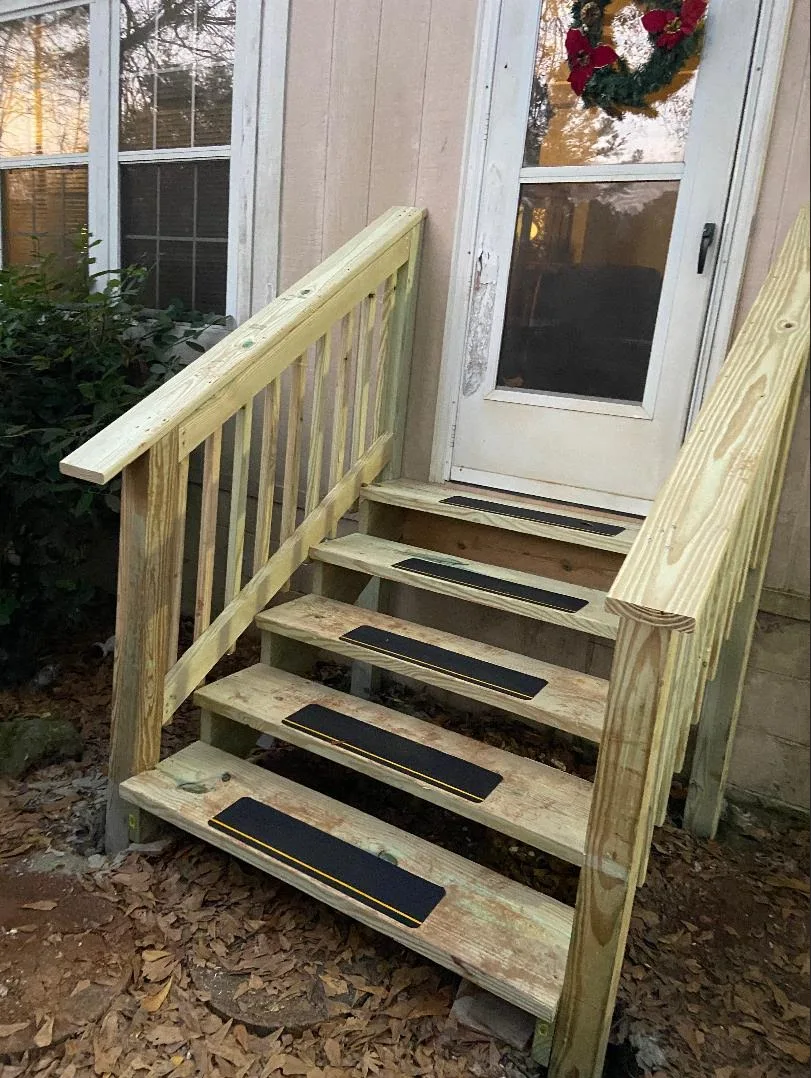
Keep the repair scope and dated completion photos with the property records. If the same area develops a problem again, that record gives the next assessor a starting point. For the stairs serving a deck, see our guide to repairing or replacing exterior wooden stairs. Jayden can discuss exterior repair needs based on the property and requested scope.
Frequently asked questions
Can I replace deck boards without checking the framing?
That risks overlooking the cause or extent of the problem. The condition of the support and attachments should inform whether new boards are an appropriate solution.
Does a worn finish mean the deck is unsafe?
Not necessarily. A finish problem and a structural problem are different. Visible movement, sagging, decay, or connection concerns need separate attention.
Is replacement always more expensive than repair?
There is no reliable universal comparison. Scope, access, materials, concealed damage, and retained components all affect the estimate. Compare written proposals for your property.