Start with the warning signs
Look from a stable location before using the stairs. Notice changes since your last visit: a tread that has dropped, a rail that leans, or a gap where the stairs meet the landing. Do not bounce on steps or pull hard on a rail to test its strength.
- Wood rot: crumbling edges, areas that appear soft or break apart, and loss of material around connections deserve investigation. Dark color alone does not prove rot.
- Loose railings: movement at the post, missing fasteners, or separation at the landing can make a handhold unreliable.
- Unstable steps: loose or split treads, uneven support, and a visibly shifting stair assembly need prompt attention.
- Weather damage: repeated wetting, worn finishes, and cracks can create maintenance needs even before a structural problem is apparent.
If the stairs visibly sag, shift, or have a broken tread or unsafe railing, keep people off them and arrange an assessment. Use another safe entrance where available.
Look beyond the walking surface
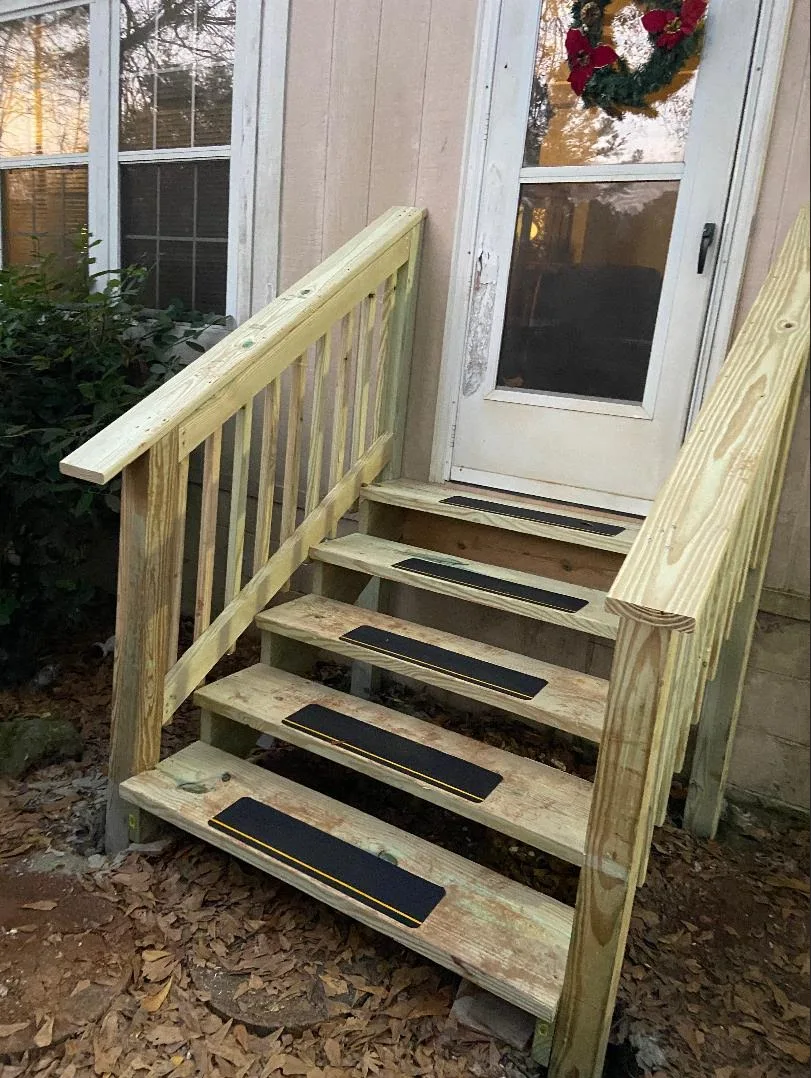
The horizontal boards you step on are treads. The sloped members supporting them are stringers. Posts, landings, and connections complete the assembly. Replacing a tread will not resolve deterioration in the stringer beneath it.
Ask an assessor to explain which parts remain serviceable, which need replacement, and whether a water problem is contributing to the damage. Observations from the top alone may not reveal the condition of hidden connections. Leave access beneath unstable stairs to a professional.
How to compare repair and replacement
| What is found | What to discuss |
|---|---|
| One damaged tread with sound underlying support | A localized repair and a review of adjacent treads and attachments. |
| A loose railing or post | The cause of movement and the condition of its attachment, not simply a new top rail. |
| Deteriorated stringers, landing support, or several connections | A wider repair or full replacement based on the whole assembly. |
| Repeated patches that fail in the same area | Whether the previous scope missed moisture, support, or drainage problems. |
Request comparable scopes rather than comparing price alone. Each estimate should identify removal, replacement components, finish work, disposal, and any exclusions. Ask who will confirm applicable local requirements and whether permits are needed for the proposed work.
A practical exterior-care routine in Alabama
For a Tuskegee or other Alabama property, make exterior stairs part of your regular property walkaround and revisit them after significant rain or storm damage. Record where water or debris collects instead of assuming a new coating will solve the problem.
Keep the walking route clear, report drainage concerns, and follow the product instructions for any finish used on sound wood. Coating damaged wood is not a substitute for repairing it. The EPA’s moisture guidance emphasizes correcting water problems rather than treating only their visible effects.
What to send with an assessment request
Photograph the entire stair run, the landing, and each concern from safe positions. Include the property address, the location of the stairs, when the issue appeared, and whether another entrance is available. Explain whether this is a homeowner request or a managed-property work order.
Jayden’s exterior repair services include stairs and railings. A clear description helps the team discuss the scope without guessing from a close-up photo. For similar decisions around outdoor platforms, read our deck repair-versus-replacement guide.
Frequently asked questions
Does gray wood mean the stairs must be replaced?
No. Surface weathering and loss of structural material are different concerns. The condition of the wood, supports, and attachments matters more than color alone.
Can I replace just the bad steps?
Possibly, if the underlying support and remaining assembly are suitable. Confirm the cause and extent of damage before treating it as a tread-only repair.
Can photographs confirm that stairs are safe?
No. Photos help describe a concern but cannot establish the strength of hidden supports or connections. An on-site assessment may be needed.